
The Politics, Policy and Reality of “Under-Occupation” in Modern Britain
Have a Spare Bedroom? The Council Wants £1,000
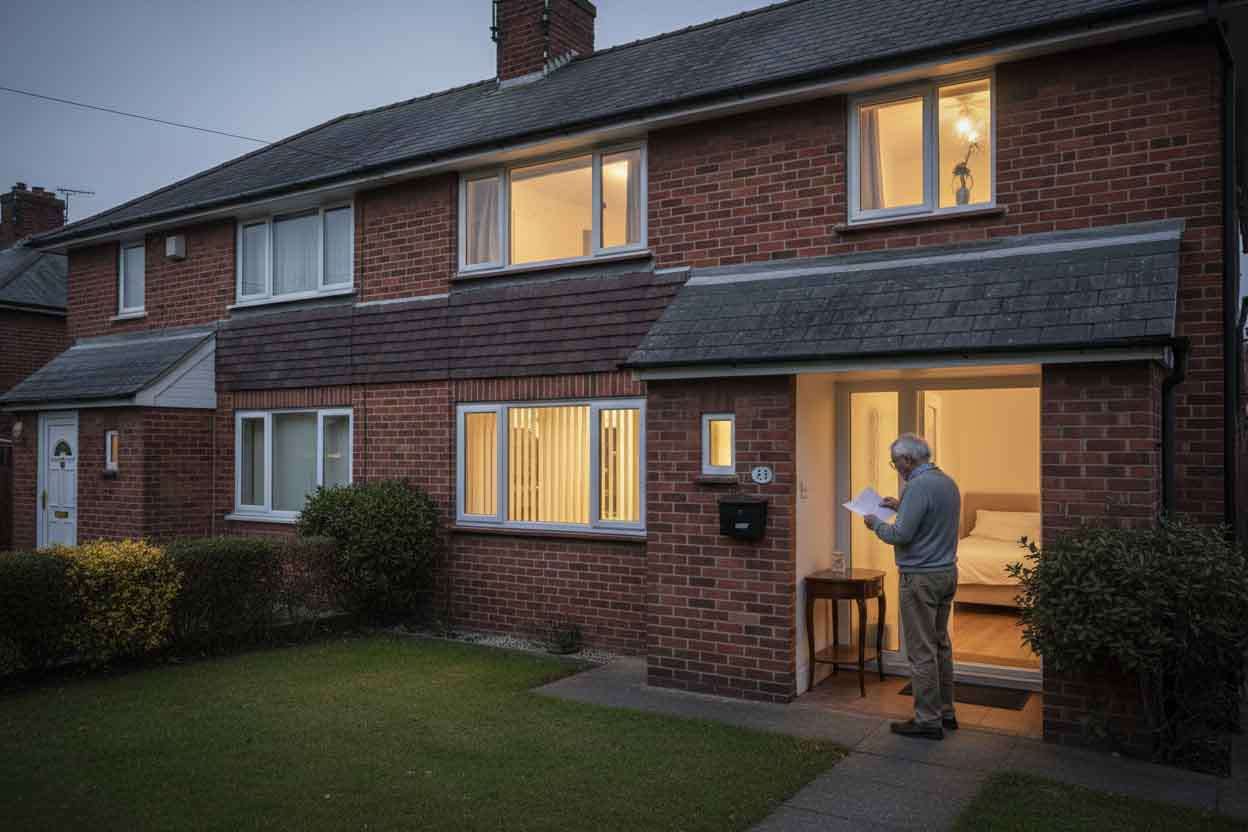
You worked for decades to buy your home. Month after month, year after year, you paid the mortgage. You sacrificed holidays, postponed luxuries and tightened your belt to ensure that, one day, you would own your property outright. It was not merely a financial transaction. It was security. It was independence. It was a promise to yourself that in retirement you would have stability, dignity and a place that was truly yours.
You raised your family within those walls. You painted bedrooms, assembled flat-pack wardrobes and measured children’s heights against the kitchen doorframe. Over time, your children grew up and moved out. They found their own homes, their own lives, perhaps their own families. If you have lost a spouse, you may now live alone in what was once a busy family house. The rooms are quieter, but they are filled with memories. The house is not an “asset” in the abstract; it is your sanctuary.
For years, you believed that once the mortgage was paid, your financial pressures would ease. Your outgoings would become predictable. Your pension would cover the bills. Yet in recent debates across local government, a new anxiety has emerged for many homeowners: the prospect that having one or more “spare” bedrooms could significantly increase your council tax liability.
The claim circulating in some quarters is stark. Councils, facing acute financial pressures, are allegedly preparing to abolish the long-standing 25 per cent single person discount and to introduce punitive “under-occupation” premiums for owner-occupiers with empty bedrooms. In some scenarios, it is suggested that this could add £1,000 or more to an annual bill.
Whether one views such claims as exaggerated, speculative or plausible in the current fiscal climate, they speak to a deeper unease in Britain: the tension between private property rights, intergenerational fairness, and the financial sustainability of local government. This article examines that tension in detail. It explores the history of “bedroom tax” policy, the financial crisis facing councils, the mechanics of council tax discounts and premiums, the growing role of data matching in public administration, and the arguments for and against using fiscal levers to encourage downsizing.
Above all, it considers what this debate reveals about the evolving relationship between the state and the homeowner in twenty-first century Britain.
The Roots of the “Bedroom Tax”
To understand current anxieties, it is necessary to revisit 2013. That year, the UK Government introduced the under-occupation penalty for certain tenants in social housing. Officially termed the “removal of the spare room subsidy”, it became widely known as the “bedroom tax”.
Under the policy, working-age tenants in council or housing association properties who were deemed to have more bedrooms than they required saw their housing benefit reduced. One “spare” bedroom resulted in a 14 per cent reduction; two or more led to a 25 per cent cut. The justification was clear: in a context of housing shortages and overcrowding, the state could not continue to subsidise under-occupation in social housing.
The policy was controversial from the outset. Critics argued that it penalised vulnerable tenants, including disabled people who required additional space for carers or medical equipment. Supporters maintained that it was a necessary reform to encourage efficient use of scarce housing stock and to reduce welfare expenditure.
Crucially, the policy applied only to social housing tenants claiming housing benefit. Owner-occupiers were unaffected. Many private homeowners watched the debate from a distance, believing it had little to do with them. They had purchased their homes with private funds. They were not receiving housing subsidy. The number of bedrooms in their property was a matter of personal choice and financial capacity.
However, the broader concept underlying the policy—that under-occupation constitutes a social and economic inefficiency—did not disappear. It remained embedded in housing policy discourse.
The Financial Crisis in Local Government
Since 2010, local authorities across England have experienced sustained funding pressures. Reductions in central government grants, rising demand for adult social care and children’s services, inflationary pressures and limits on council tax increases have created structural deficits in many councils’ budgets.
In recent years, several high-profile authorities have issued Section 114 notices, effectively declaring themselves unable to balance their budgets without drastic measures. When such a notice is issued, councils are legally required to restrict spending to statutory minimum services. Discretionary spending is curtailed. Political leaders face difficult choices.
Council tax, introduced in 1993, remains a primary source of locally retained revenue. However, annual increases are typically capped, often around five per cent, unless approved by local referendum. In practice, referendums to raise council tax beyond the cap are rare. As a result, councils must seek other ways to generate revenue or reduce costs.
It is in this context that speculation about new council tax premiums for “under-occupation” has arisen. Councils already possess certain powers to apply premiums in specific circumstances, such as for long-term empty homes or second homes. The question is whether those powers could be extended—or reinterpreted—to target owner-occupiers deemed to be “under-occupying” their properties.
The Single Person Discount: A Cornerstone of Council Tax
Under current legislation, households with only one adult resident are entitled to a 25 per cent reduction in their council tax bill. This single person discount has been a feature of the system since its inception. The rationale is straightforward: a single adult household is assumed to make less use of local services than a multi-adult household.
For many pensioners, widows, widowers, single parents and individuals living alone, the discount is significant. On a Band D property, where annual council tax might exceed £2,000 in many areas, a 25 per cent reduction can amount to several hundred pounds per year.
If such a discount were abolished, the immediate financial impact on single-adult households would be noticeable. For those on fixed incomes, particularly state pensions, even an additional £40–£60 per month could require difficult adjustments.
At present, the single person discount is enshrined in legislation, and any nationwide abolition would require central government action. However, in periods of fiscal strain, policy debates can evolve. Some commentators have suggested that councils might seek greater discretion over discounts in order to manage their budgets.
The Concept of an “Under-Occupation Premium”
In addition to discounts, councils can apply certain premiums. For example, properties left empty for extended periods can attract additional council tax. Second homes have also been subject to increased charges in some areas.
The more controversial idea is whether a property occupied by a single adult but containing multiple unused bedrooms could be treated similarly to an “under-used” asset. Advocates of such an approach argue that, in the midst of a housing crisis, it is inequitable for large properties to be occupied by a single individual while families struggle to find suitable homes.
Critics counter that owner-occupiers have paid for their properties and should not be penalised for the size of their homes. They emphasise that the council tax system is based on property bands, not occupancy levels, and that expanding premiums to penalise lawful under-occupation would represent a significant policy shift.
A hypothetical example often cited illustrates the potential scale of impact. Suppose a Band E property has an annual council tax of £2,500. With a 25 per cent single person discount, the bill falls to £1,875. If the discount were removed, it would revert to £2,500. If, on top of that, a 50 per cent “under-occupation premium” were applied, the total could rise to £3,750.
Such figures are speculative, but they demonstrate why the issue provokes strong emotions among homeowners.
The Housing Crisis and Intergenerational Tensions
Behind the fiscal debate lies a broader housing crisis. House prices have risen dramatically over recent decades, particularly in parts of southern England. Younger generations face significant barriers to home ownership. Private rents have increased, and social housing waiting lists remain long.
In this environment, some policymakers argue that better utilisation of existing housing stock is essential. Data frequently cited in debates indicate that a substantial proportion of larger homes are occupied by older households with no dependent children. Encouraging downsizing, it is argued, could free up family-sized homes.
However, downsizing is not always straightforward. Emotional attachment, community ties, lack of suitable smaller properties, and the financial costs of moving all act as barriers. For many older homeowners, the family home represents stability and identity, not merely square footage.
The question then becomes: should fiscal policy be used to influence such deeply personal decisions?
Data Matching and the Modern Council
Another dimension of the debate concerns enforcement. Council tax discounts are based on accurate declarations of household composition. Councils have long conducted reviews to ensure compliance. In recent years, technological advances have enabled more sophisticated data matching.
Through initiatives such as the National Fraud Initiative, public bodies can cross-reference data sets to detect anomalies. Credit reference agencies, electoral registers, benefits records and other databases may be compared to identify potential discrepancies.
For example, if a property claims a single person discount but multiple adults are registered at that address on other official records, the council may initiate a review. Residents may be asked to provide evidence of occupancy.
Smart meters and other digital technologies have also transformed the data landscape, although the extent to which utility data are shared with councils for council tax enforcement is subject to legal and regulatory safeguards.
While such tools can help combat fraud and ensure fairness, they also raise concerns about privacy and proportionality. The balance between efficient revenue collection and respect for individual rights is delicate.
The Legal Framework and Data Protection
Under the UK General Data Protection Regulation (UK GDPR), individuals have rights in relation to automated decision-making and profiling. Article 22 provides, in certain circumstances, a right not to be subject to a decision based solely on automated processing that produces legal effects.
If a council were to rely exclusively on algorithmic profiling to alter a person’s tax liability, questions could arise about compliance with data protection law. In practice, most public bodies incorporate human oversight into decision-making processes, particularly where significant financial consequences are involved.
Residents who believe that a council tax decision has been made incorrectly have avenues of appeal. These may include internal review, appeal to a valuation tribunal, and, in some cases, complaints to the Information Commissioner’s Office if data protection rights are implicated.
Understanding these legal frameworks is important for any homeowner concerned about potential changes.
Strategies Homeowners Consider
In discussions about possible under-occupation charges, several strategies are often mentioned.
One is physical alteration of a property to reduce the number of bedrooms as officially recorded. The Valuation Office Agency (VOA) maintains information about property characteristics for council tax purposes. If a room is fundamentally altered so that it is no longer capable of functioning as a bedroom, it may be possible to request an update to the property’s description. Such changes must be genuine and compliant with planning and building regulations.
Another is taking in a lodger. The Government’s Rent a Room Scheme allows homeowners to earn up to a specified threshold in rental income from letting furnished accommodation in their home without paying tax on it. In addition to providing income, having an additional adult resident could affect council tax liability. However, homeowners should consider the practical implications and ensure compliance with tenancy and licensing laws.
A third involves ensuring that household composition records are accurate and up to date. Errors can lead to disputes and potential penalties. Transparency and timely communication with the council are generally advisable.
It is important to stress that deliberately misrepresenting occupancy to obtain a discount constitutes fraud and can lead to penalties. The legal and financial risks far outweigh any short-term savings.
The Emotional Dimension
Beyond policy mechanics lies a profound emotional dimension. For many older homeowners, the suggestion that they are “under-occupying” their homes feels accusatory. The house was purchased through years of labour and sacrifice. It is not perceived as a public resource to be reallocated.
Equally, for younger families facing cramped conditions and high rents, the sight of large homes occupied by one person can symbolise structural inequality. The debate is therefore not merely fiscal but moral and generational.
Politicians must tread carefully. Any policy perceived as forcing elderly homeowners out of their homes could provoke public backlash. Conversely, failure to address housing shortages fuels frustration among younger voters.
Property Rights and the Social Contract
At the heart of the controversy is a fundamental question: what does property ownership mean in modern Britain?
Ownership has always been subject to taxation and regulation. Council tax, inheritance tax, capital gains tax and stamp duty are longstanding features of the system. Planning laws restrict how property may be used. Even freehold ownership does not confer absolute autonomy.
Yet there remains a deeply ingrained cultural belief that one’s home is one’s castle. Policies perceived as encroaching on that autonomy—particularly in retirement—can feel like a breach of the social contract.
Supporters of reform argue that property rights must be balanced against social need. Opponents insist that penalising lawful ownership undermines trust and security.
Economic Incentives Versus Coercion
Public policy often relies on economic incentives to shape behaviour. Tax reliefs encourage certain activities; higher duties discourage others. The line between incentive and coercion, however, can be contested.
Encouraging downsizing through voluntary schemes—such as assistance with moving costs, priority access to desirable retirement housing, or tax breaks—may be more politically palatable than imposing punitive charges. The challenge is that incentives require funding, while premiums generate revenue.
Councils under severe financial pressure may be tempted to favour revenue-raising measures. The risk is that such measures could erode public trust.
The Practical Barriers to Downsizing
Even if a homeowner wished to downsize, practical barriers abound. In many areas, there is a shortage of suitable smaller properties, particularly high-quality bungalows or accessible flats. Leasehold retirement properties often carry service charges and ground rents that can offset savings in council tax.
Transaction costs are also significant. Estate agent fees, legal costs, removal expenses and stamp duty for the purchaser can reduce the net benefit of moving. Emotional costs—leaving a long-standing community, neighbours and local services—are harder to quantify but equally real.
Policymakers who wish to promote downsizing must address these barriers comprehensively.
The Role of Communication and Transparency
Misinformation and speculation can exacerbate anxiety. Clear communication from councils and central government is essential. If no plans exist to introduce under-occupation premiums for owner-occupiers, stating so explicitly can provide reassurance. If policy changes are under consideration, transparent consultation is crucial.
Homeowners should also seek reliable information from official sources rather than relying solely on social media or online commentary. Council websites, government guidance and reputable news outlets provide more authoritative detail.
Appeals and Safeguards
Should a council tax dispute arise, residents are not without recourse. The council tax system includes formal appeal mechanisms. If a resident disagrees with a council’s decision regarding discounts or premiums, they may appeal to the Valuation Tribunal for England (or equivalent bodies in Wales and Scotland).
In cases involving alleged fraud, procedural safeguards apply. Accusations must be supported by evidence. Individuals have the right to respond and to seek legal advice.
Invoking data protection rights, including requesting information about data used in decision-making, can also be appropriate where concerns arise.
The Future of Council Tax
More broadly, the debate about under-occupation reflects dissatisfaction with the council tax system itself. Property bands are based on valuations from the early 1990s in England and Scotland, leading to distortions. Calls for reform—whether through revaluation, replacement with a proportional property tax, or introduction of alternative local revenue sources—have been ongoing for years.
Any significant reform would inevitably produce winners and losers. The political difficulty of overhauling council tax has resulted in incremental adjustments rather than structural change.
If financial pressures on councils intensify, broader reform may return to the agenda.
Conclusion: A Line in the Sand?
The image of a pensioner opening a council tax bill to discover a £1,000 increase because of an empty bedroom is a powerful one. It captures fears about security in retirement, about state overreach, and about the fragility of local government finances.
At present, sweeping under-occupation premiums for owner-occupiers remain speculative. However, the underlying issues—housing shortages, council insolvency, generational inequality and the expanding role of data in governance—are real.
For homeowners, the key is awareness without panic. Understand your rights. Keep your records accurate. If you receive correspondence from your council, respond promptly and seek clarification where needed. Explore legitimate options, such as the Rent a Room Scheme, if they suit your circumstances.
For policymakers, the challenge is to balance fiscal necessity with fairness and compassion. Any attempt to reshape housing patterns through taxation must consider not only economic efficiency but also the lived realities of those affected.
Britain’s housing debate is unlikely to subside. As demographics shift and financial pressures mount, questions about who lives where—and at what cost—will persist. Whether the family home remains an unquestioned refuge or becomes a focal point of fiscal policy will depend on decisions yet to be made.
In the meantime, the conversation itself is instructive. It reminds us that property, taxation and community are intertwined. Homes are not merely units in a housing stock spreadsheet. They are places of memory, belonging and identity. Any policy that touches them must proceed with care.
Frequently Asked Questions
What is the “single person discount” and is it currently at risk of being abolished? The single person discount is a long-standing provision in the UK council tax system that grants a 25 per cent reduction to households where only one adult resides. While it is currently enshrined in national legislation, the ongoing financial crisis facing many local authorities has led to policy debates regarding its sustainability. Some local government experts suggest that councils may seek greater discretionary powers over such discounts in the future to help bridge significant budget deficits, though any nationwide removal would require a formal change in government policy.
Can a local council legally charge a “bedroom tax” on a home that I own privately? Under current UK law, the “under-occupation penalty”—commonly known as the bedroom tax—applies only to working-age tenants in social housing who receive housing benefit. There is currently no statutory “private bedroom tax” for owner-occupiers. However, councils do have the power to apply premiums to properties they deem “long-term empty” or “second homes.” The current debate centres on whether these powers could eventually be expanded or if new legislation could be introduced to target under-occupied private residences as a way to generate revenue and encourage downsizing.
How do local authorities verify how many people are actually living in my property? Modern local authorities use sophisticated data-matching technology to ensure council tax declarations are accurate. Through the National Fraud Initiative and partnerships with credit reference agencies, councils can cross-reference your address against electoral registers, credit applications, mobile phone contracts, and other financial footprints. If a discrepancy is found—such as a resident claiming a single person discount while another adult has a bank account registered to that same address—the council may initiate a formal review and request evidence of occupancy.
What are the potential financial implications if an under-occupation premium were introduced? If a council were to remove the 25 per cent single person discount and simultaneously apply a hypothetical 50 per cent under-occupation premium, the financial impact would be substantial. For a property in Council Tax Band E with a standard bill of £2,500, a single resident currently pays £1,875. Without the discount and with the addition of a premium, that bill could theoretically rise to £3,750. This represents a doubling of the tax liability, which could be particularly devastating for pensioners or those on fixed incomes.
What legal protections do I have if I feel I am being unfairly targeted by an automated tax decision? Under Article 22 of the UK General Data Protection Regulation (UK GDPR), citizens have the right to contest decisions made solely on the basis of automated processing or profiling that produces a significant legal or financial effect. If a council uses an algorithm to automatically remove a discount or apply a penalty, you have the right to demand a manual human review of your case. Furthermore, any homeowner has the right to appeal a council tax banding or liability decision through the Valuation Tribunal if internal disputes with the local authority cannot be resolved.